Four musicians. Eleven years. Five records. One question, asked of everyone in Franklin County, answered by no one. Parts one and two are from the band's own file. Parts three to eight were assembled from the bait-shop ledger.
No. 1 · 1978–1992
The Mystery
Nobody knows why it's two.
Not one. Not three. Two.
Every person who has ever been asked — former members, venue owners, the man at the bait shop on Water Street who claims to have been present at the first rehearsal — has been asked why it's two fingers specifically. Nobody has answered satisfactorily. Nobody appears to know with certainty.
The band, in the one interview they gave (to WOYS-FM Carrabelle, 1984, on a cassette tape that partially survived a 1992 flood), was asked directly. Lead vocalist Curtis "Two-Bit" Ladner said: "You know why." The interviewer said he did not know why. Curtis said: "Then you'll figure it out." He then played a harmonica note that lasted approximately eleven seconds.
Nobody has figured it out. This is the central documented fact of Two Stinky Fingers.
No. 2 · 1978
The Bait Shop
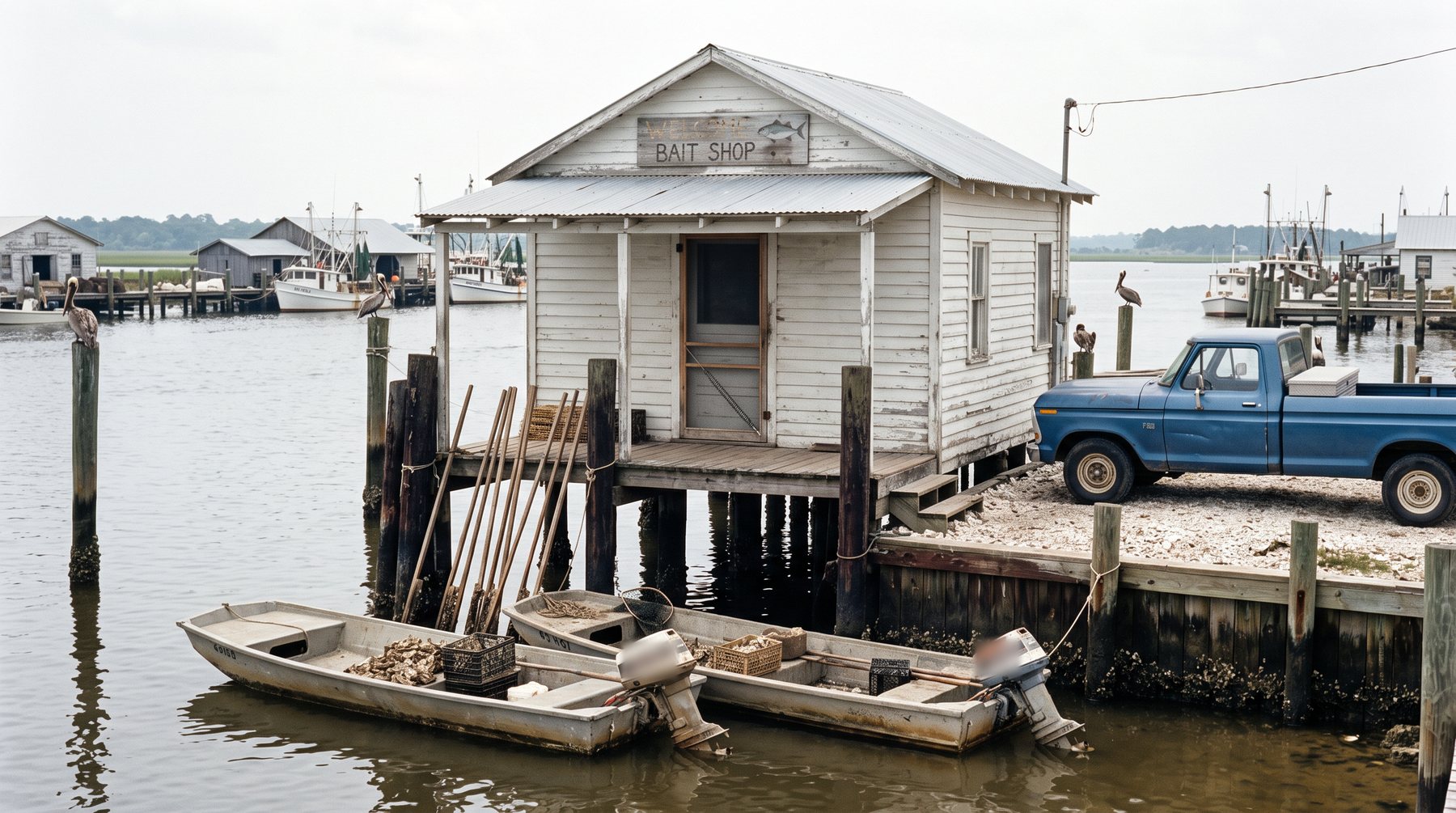
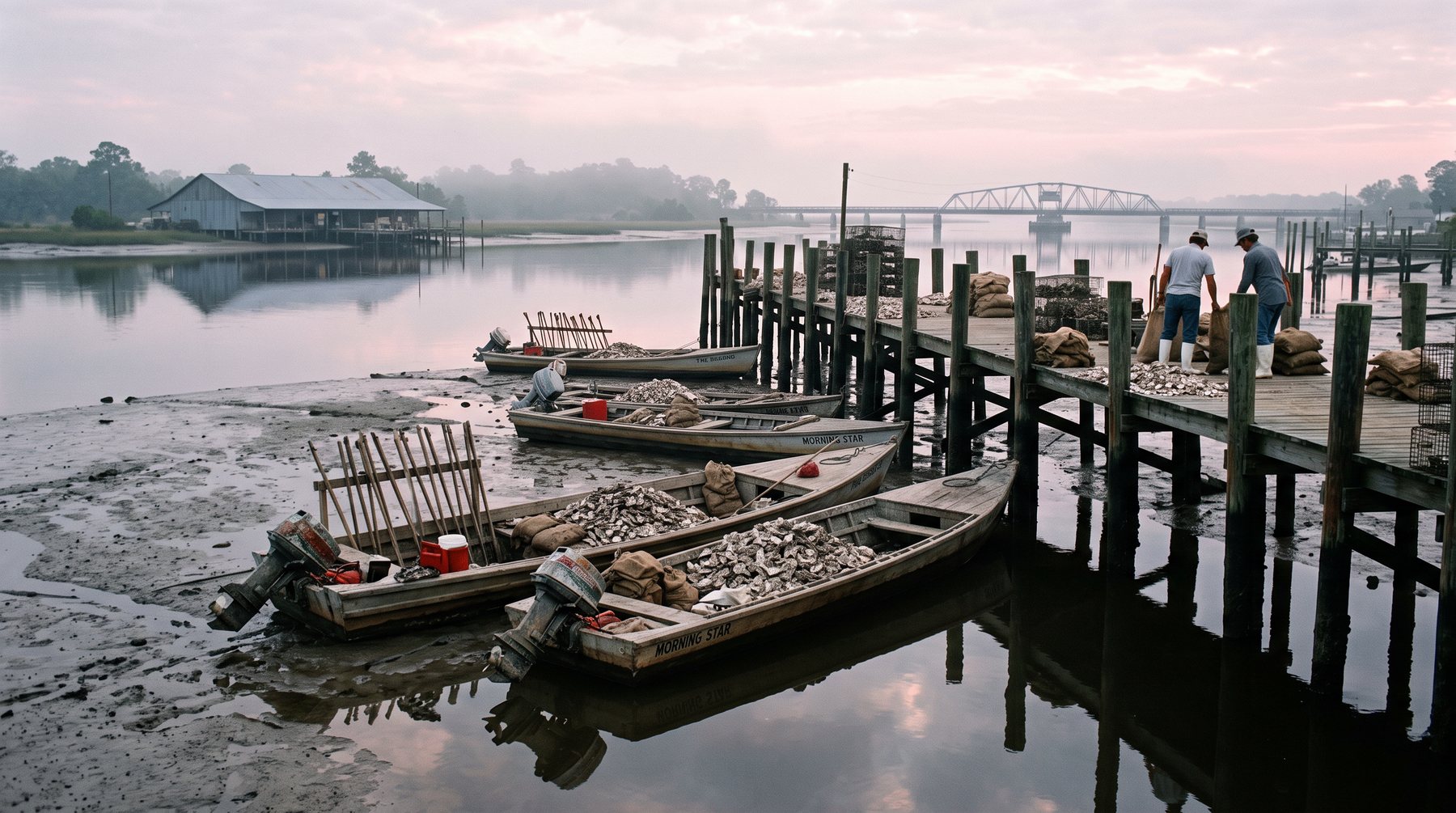
Apalachicola, Florida, 1978. The oyster capital of the Florida panhandle. A town at the end of a road that doesn't go anywhere else, on a gulf that has no opinion about anything you have going on.
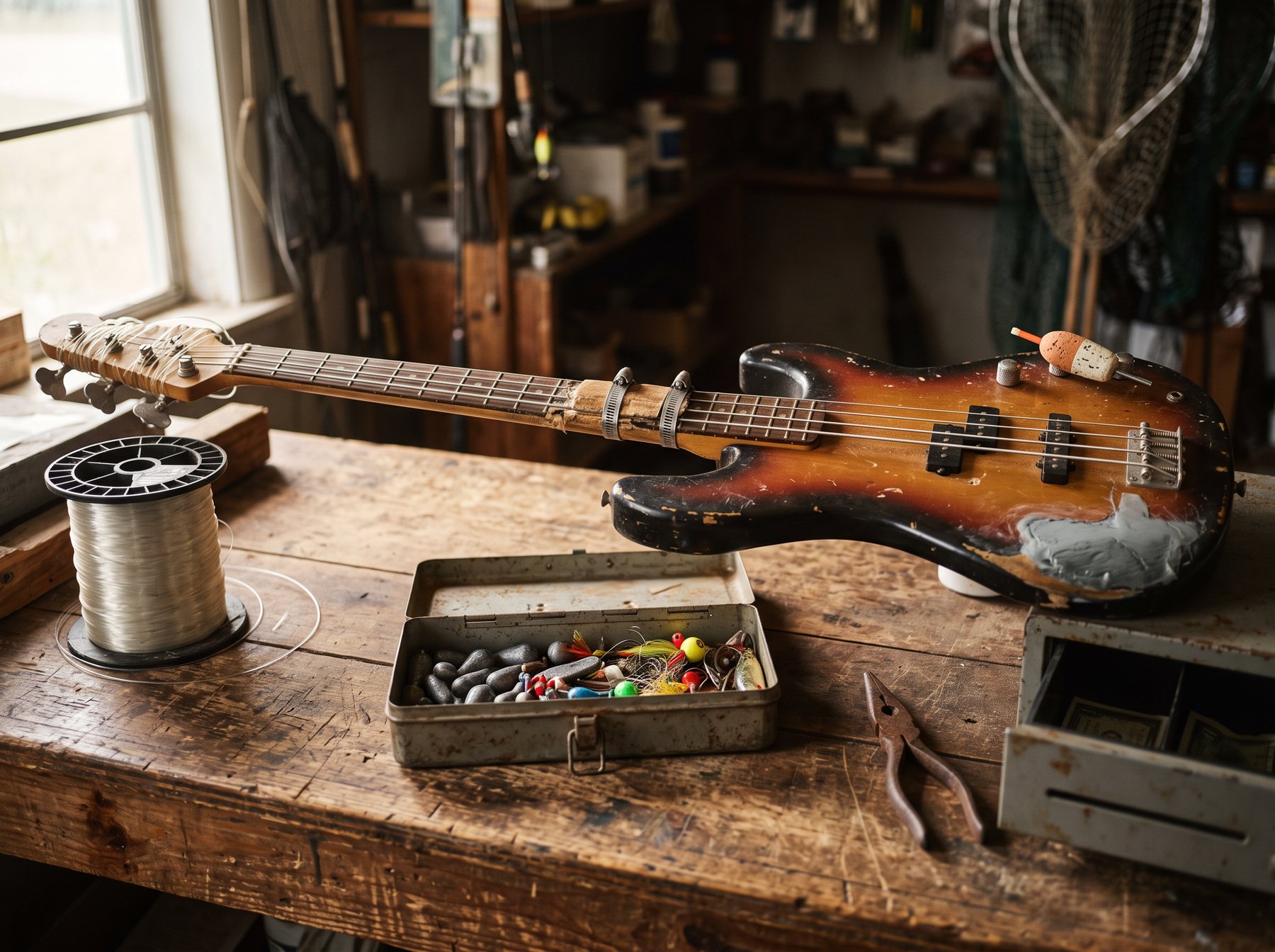
Two Stinky Fingers formed because Curtis Ladner had a slide guitar, Eugene "Fish" Fontenot had a bass he'd found in a dumpster behind a bar in Eastpoint and repaired with materials from the bait shop where he worked, and because there was genuinely nothing else to do in Apalachicola on a Tuesday night in August that didn't involve sitting very still and sweating.
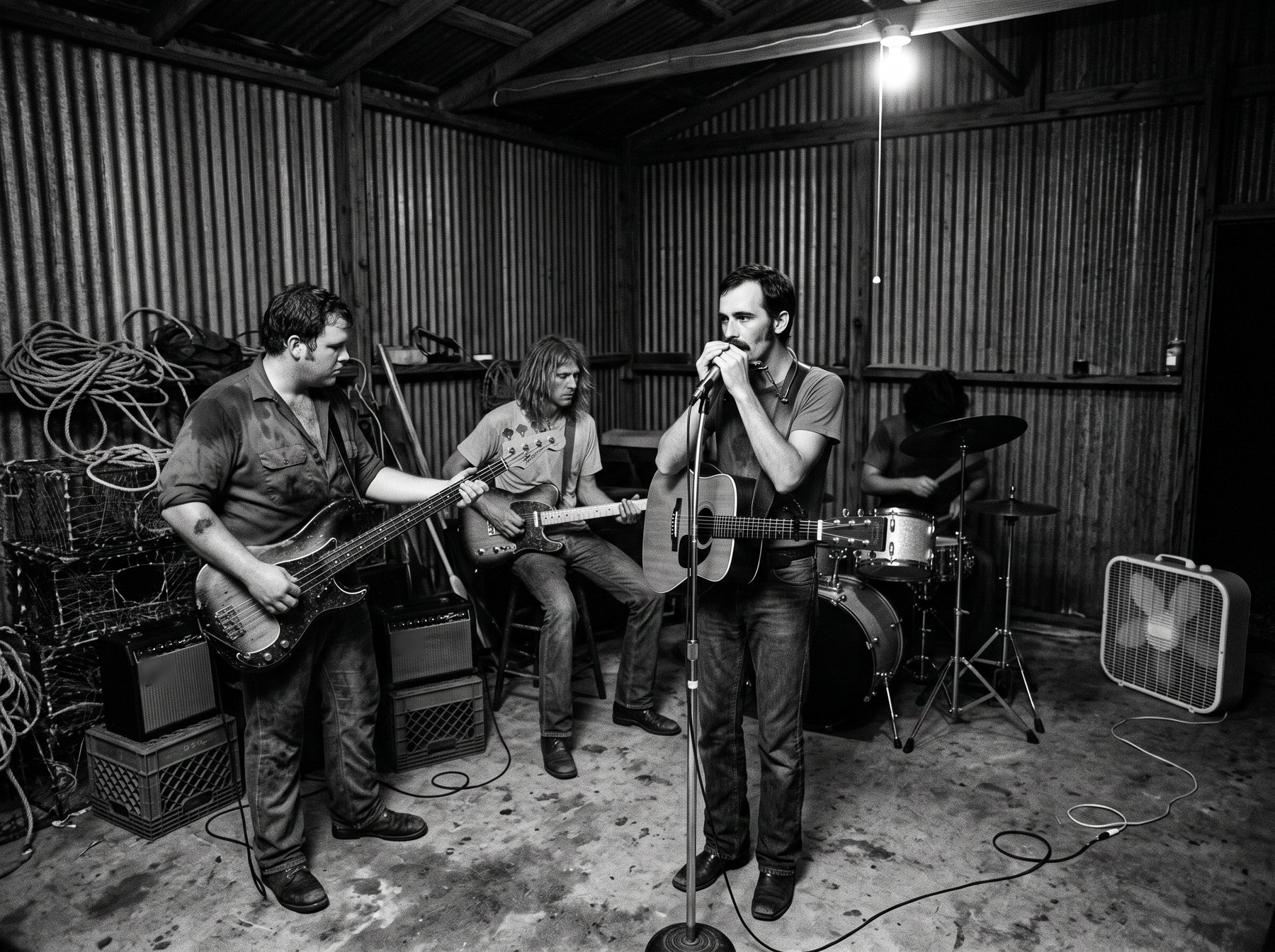
The drummer, known only as "Damp" — a nickname whose origin is separately mysterious from the band name — was recruited from Carrabelle. They played the blues. Specifically the blues as it would sound if developed in a corrugated tin building near the water: slower, wetter, smelling distinctly of brine.
No. 3 · 1978–1979
The Counter
The bait shop on Water Street sold live shrimp, crickets, ice, and, from the spring of 1979, records. Eugene worked the counter. The owner, a man named Odell Gaskin, let the band use the back room and the tin building behind it on the condition that nobody touched the minnow tanks.
Curtis owned a slide guitar he could not play. At the first rehearsal he handed it to Roy Thibodaux, who could. Curtis kept the harmonica. This is the only detail of that night the band will discuss.
In March 1979 they recorded eight songs on a borrowed four-track at low tide, when the floor of the tin building was dry. Mr. Gaskin paid for two hundred copies and named the label after the county, because, he said, a label needed a name and the county had one already. The record was called Two. It was sold from the counter, between the crickets and the ice. It sold out in fourteen months.
No. 4 · 1980–1981
Track Three
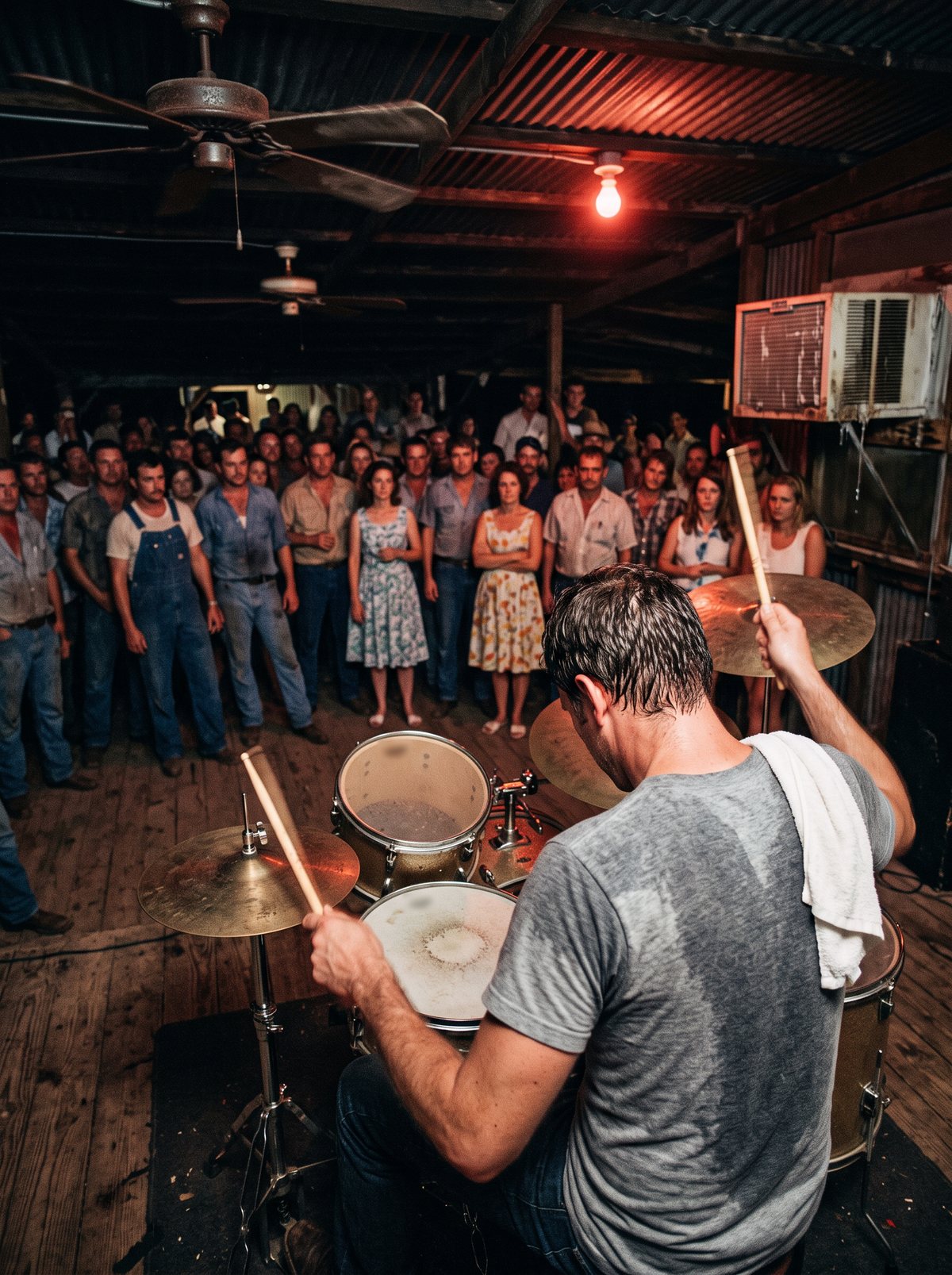
The second record was recorded between June and August 1980, in heat that the band describes only as August. On a Tuesday in July, at the end of the second verse of a different song, Damp kept playing.
The others stopped. Damp did not. The solo lasted seven minutes. Roy has said that at about four minutes he considered coming back in and decided against it. Eugene, who was running the tape, let it run. When Damp stopped, nobody said anything for some time. Then Curtis said it would be track three.
Bait Shop Blues came out in the spring of 1981. It was the one that got reviewed: a Gulf Coast weekly out of Biloxi said that if you were only buying one, it was the one, and that track three ran seven minutes the whole way through. The band had the review framed and hung it in the bait shop over the minnow tanks.
No. 5 · 1981
The Circuit
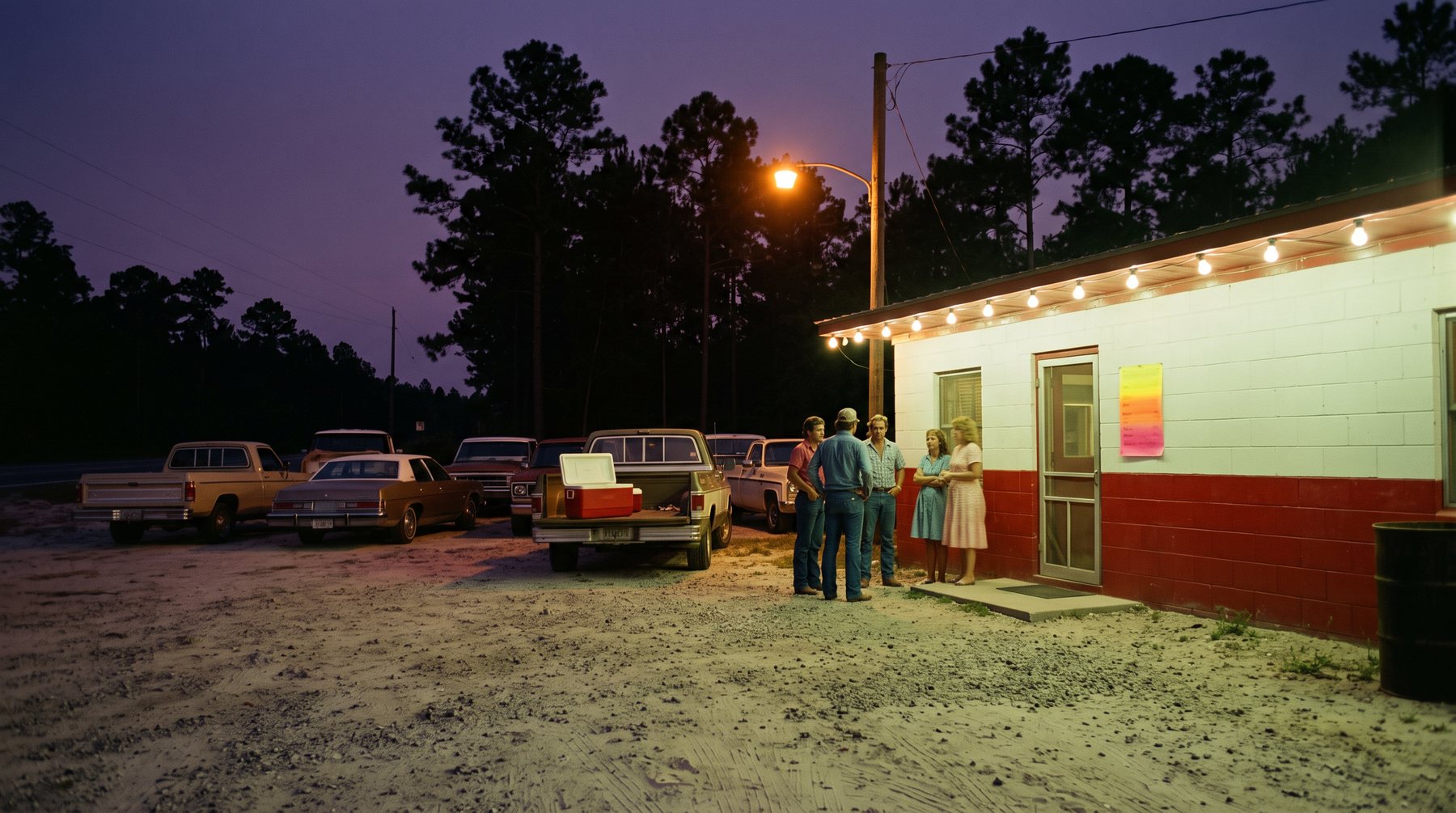
In the summer and fall of 1981 the band played its only tour, the Gulf Coast Circuit. Nine stops, most within a day's drive of the bay: Apalachicola, a bait shop that was not the one on Avenue D, Eastpoint, Carrabelle, Sopchoppy, Wewahitchka, Hosford, Port St. Joe, and Apalachicola again.
They travelled in Mr. Gaskin's delivery truck with the drums strapped down among the coolers. Every venue was asked the same question by someone in the audience. The band did not answer it at any of them.
The circuit card lists a tenth entry with no town, only the words "You Know Why." The archive has not established whether this was a show. Eugene's ledger has an entry for it, a date in November 1981, and a total of eleven dollars.
No. 6 · 1982–1984
Apalachicola
The third record was named after the town and recorded in it, over the winter of 1983, during the months with an R in them, when the oyster boats were working and the band worked around them.
The band sent a copy to the town. It was not acknowledged. Curtis has said he did not expect it to be.
In 1984 the band gave its only interview, to a radio station in Carrabelle. Curtis was asked why it is two. He said, "You know why." The interviewer said he did not. Curtis said, "Then you'll figure it out," and played one harmonica note for about eleven seconds. The cassette of that interview survived a flood in 1992, partly. The eleven seconds survived in full.
No. 7 · 1985–1987
The Roof
In November 1985 a late-season hurricane came ashore west of Apalachicola. The tin building lost its roof. The bait shop lost its sign and kept everything else. The band lost a cymbal stand, later found in a yard on Avenue D.
Mr. Gaskin put a new roof on the building over the winter. The band recorded the fourth record under it, between March and September 1986. It was called You Know Why. Curtis has said the title refers to the fingers. He has not said anything further.
It closes with an eleven-second harmonica note, recorded to match the one on the radio.
No. 8 · 1988–1989
They Stopped Showing Up
There was no last show. There was no announcement. In late November 1989 Damp stopped driving over from Carrabelle on Tuesdays. The following week Roy did not come. Curtis and Eugene sat in the tin building until dark, and then went home.
Nobody quit. Nobody has said the band ended. Eugene's ledger has no entries after November 1989 except a list of how many copies of each record were left.
In December 1989 Mr. Gaskin found a reel in the back room with two takes nobody remembered. He put them with ten tracks from the four records and pressed three hundred copies. He called it Franklin County, after the label, which was named after the county. The sleeve calls it a posthumous compilation. All four members are, as far as the archive knows, alive. The band is not.
A tin building near the water, Apalachicola. The sound, as the file describes it.